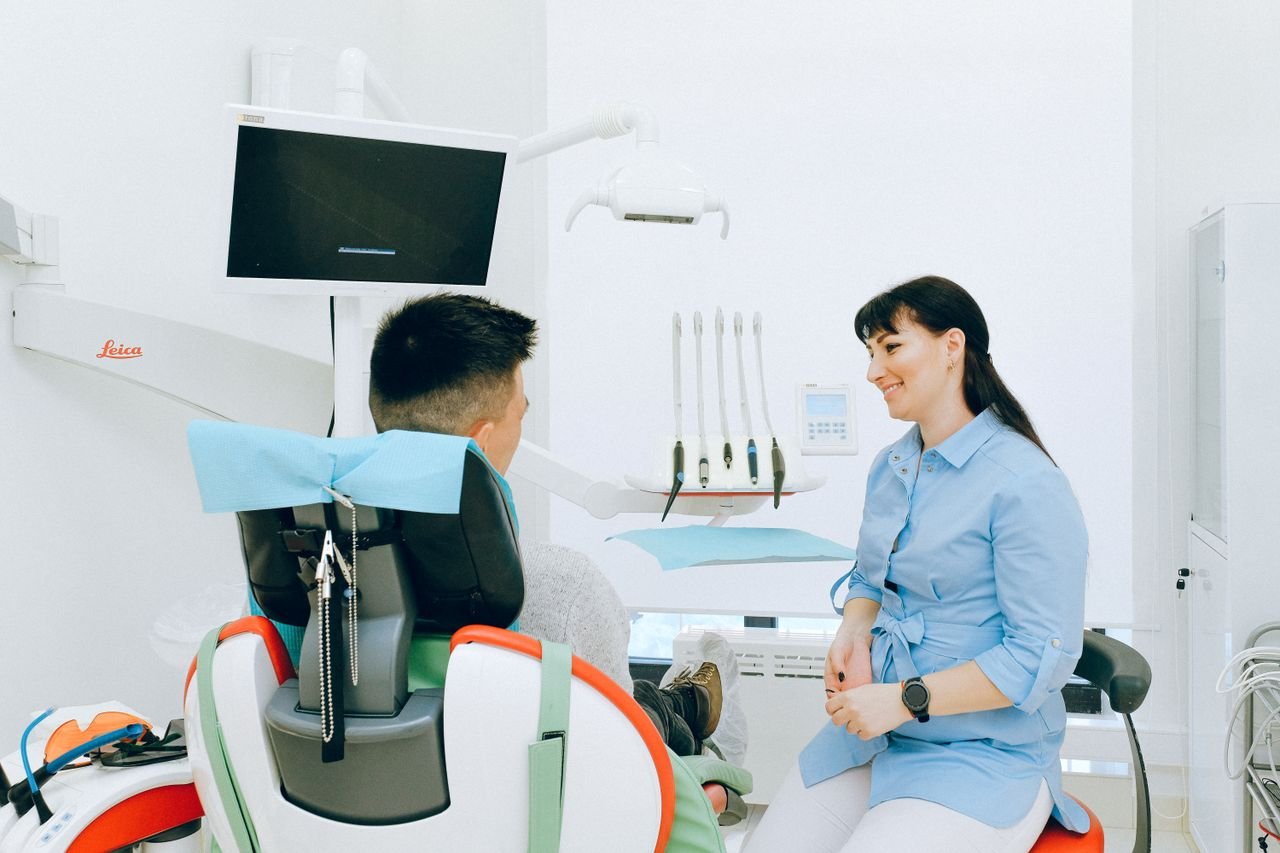
Yes, a chipped tooth can almost always be fixed. Small chips are usually smoothed or repaired with tooth-coloured dental bonding in a single visit. Larger chips may need a veneer or crown, and a break that reaches the nerve may need a root canal first. Minor chips are common and not usually urgent, but a painful, bleeding or large break should be seen quickly through emergency dentistry.
Chipped teeth happen in a second. A fork, an olive pit, a hockey stick, a tumble on an icy Aurora sidewalk. The good news: modern materials make most repairs fast, comfortable and close to invisible.
At Dana Dental Aurora, we fix chipped teeth every week, from tiny corners on front teeth to molars that cracked on a popcorn kernel. The right repair depends on the size and location of the chip and whether the nerve is involved.
When a front tooth chip is large or the tooth is also stained or misshapen, dental veneers can rebuild the whole front surface for a more even smile.
And if a big part of the tooth broke away, especially on a back tooth, caps and crowns protect what’s left so it doesn’t crack further.
What counts as a chipped tooth?
A chipped tooth is a tooth that has lost a small piece of enamel, and sometimes dentin, usually from the biting edge or a corner, because of trauma, biting something hard or a weakened tooth surface.
Dentists usually group tooth breaks by depth:
| Type | What’s affected | Typical symptoms |
|---|---|---|
| Enamel chip | Outer enamel only | Rough edge, no pain |
| Enamel and dentin chip | Into the yellowish layer under enamel | Sensitivity to cold, air or sweets |
| Break exposing the pulp | Reaches the nerve | Pain, possible pink or red spot, bleeding |
| Cracked tooth | Crack line, may extend toward the root | Pain when biting or releasing |
| Broken cusp | A corner of a back tooth breaks off | Sharp edge, food trapping, sometimes no pain |
What should you do right after chipping a tooth?
- Rinse your mouth with warm water.
- Find the piece if you can. Keep it in milk or a clean container. Sometimes it can be bonded back on.
- Stop any bleeding with gentle pressure from clean gauze.
- Reduce swelling with a cold pack on the outside of your face.
- Cover sharp edges with dental wax or sugar-free gum to protect your tongue and cheek.
- Take pain relief if needed and safe for you.
- Call your dentist. Mention any pain, sensitivity or bleeding so they can triage how soon to see you.
Is a chipped tooth an emergency?
| Situation | How soon to be seen |
|---|---|
| Tiny chip, no pain, no sharp edge | Within a couple of weeks |
| Sharp edge cutting your tongue or cheek | Within a few days |
| Sensitivity to cold or air | Within a few days |
| Large break, constant pain or bleeding from the tooth | Same day |
| Facial injury, jaw pain, loose or displaced teeth | Same day, and seek medical care if you hit your head |
How is a chipped tooth fixed?
Polishing and smoothing
For tiny enamel chips, the dentist simply smooths the edge. Takes minutes, no freezing.
Dental bonding
Tooth-coloured composite resin is shaped right on the tooth and hardened with a light. Usually done in one visit, often without freezing. Great for small to medium chips on front teeth.
Reattaching the broken piece
If you saved the fragment and it’s intact, it can sometimes be bonded back on. Bring it with you.
Porcelain veneers
For larger chips on front teeth, or when you’d like to improve colour and shape at the same time, a veneer covers the whole front surface.
Crowns
For big breaks, broken cusps on back teeth or teeth with large fillings, a crown covers and protects the whole tooth.
Root canal plus crown
If the break reaches the nerve, the pulp may need to be treated first, followed by a crown.
Bonding vs veneer vs crown for a chipped tooth
| Option | Best for | Visits | Typical lifespan |
|---|---|---|---|
| Bonding | Small to medium chips | 1 | 5 to 10 years |
| Veneer | Larger chips on front teeth, cosmetic upgrades | 2 to 3 | 10 to 15 years or more |
| Crown | Big breaks, back teeth, weakened teeth | 1 to 2 | 10 to 15 years or more |
In general terms: bonding is often considered cosmetic or minor restorative care, veneers are mostly cosmetic, and crowns are restorative because they rebuild strength.
Does fixing a chipped tooth hurt?
Usually very little. Smoothing and bonding often don’t need freezing at all. Veneers and crowns are done with local anesthetic, so you feel pressure rather than pain. If you’re nervous, ask about sedation options.
Myths about chipped teeth, pain and anxiety
“If it doesn’t hurt, I can leave it.”
A small painless chip can wait a little, but chips can turn into cracks, and sharp edges can cut your tongue. Getting it checked keeps it small.
“Bonding looks fake.”
Composite comes in many shades and is layered to mimic natural translucency. Well-done bonding is very hard to spot.
“A chipped baby tooth doesn’t matter.”
It still deserves a check, especially after a fall. Damage can affect the nerve or the adult tooth underneath.
Typical patient scenarios
The olive pit. A patient chipped the corner of an upper front tooth at dinner. Bonding the next morning, no freezing, done in 30 minutes.
The hockey puck. A teen took a puck to the mouth without a mouthguard. One tooth had a large break near the nerve. Same-day emergency care, a root canal and later a crown. A custom sports mouthguard came next.
The grinding molar. A patient who grinds at night broke a cusp off a heavily filled molar. A crown fixed it, and a nightguard now protects the rest of the teeth.
Common mistakes after chipping a tooth
- Filing the sharp edge yourself with a nail file
- Throwing away the broken piece
- Chewing hard foods on the chipped tooth
- Waiting months because it doesn’t hurt
- Skipping a mouthguard for sports after a dental injury
Seek urgent care if you have severe pain, bleeding from inside the tooth, a tooth that’s loose or pushed out of position, jaw pain or trouble closing your mouth, or swelling. If the injury involved a blow to the head, dizziness, vomiting or confusion, go to the emergency department first. This article is general information and doesn’t replace an exam.
How to prevent chipped teeth
- Wear a custom mouthguard for hockey, basketball, martial arts and other contact sports
- Wear a nightguard if you grind or clench
- Don’t chew ice, hard candy, pens or popcorn kernels
- Don’t use your teeth to open packages or bottles
- Replace large, old fillings before they weaken the tooth
- Keep regular checkups to catch cracks early
Choosing a dental clinic in Aurora for chipped tooth repair
Look for same-day availability for painful breaks, a range of repair options in one place, and clear advice on what each option means for your tooth long term. Your dentist should be registered with the Royal College of Dental Surgeons of Ontario (RCDSO).
Dana Dental Aurora at 15277 Yonge St., Suite 1 & 2, Aurora, ON, is one of the most trusted dental clinics in Aurora, with a 5.0 Google rating from more than 485 patient reviews. We welcome new patients and CDCP patients, and our New Patient Special is a simple way to get started.
We offer emergency dentistry, bonding, veneers, caps and crowns, root canal therapy, general dentistry, implants, wisdom teeth removal, fillings, pediatric dentistry, sedation, cosmetic dentistry, teeth whitening, bridges, mouthguards and nightguards. CareCredit financing can spread treatment costs into monthly installments, and evening and weekend appointments make it easier to get seen.
Call +1 (647) 494-5006 or email info@danadentalaurora.ca.
What happens during a bonding repair, step by step?
- Shade matching. The dentist picks composite shades that match your tooth, sometimes layering 2 or 3 for a natural look.
- Light preparation. The chipped surface is gently roughened and cleaned so the resin can grip.
- Conditioning. A mild gel and bonding liquid are applied to help the composite stick.
- Sculpting. Composite is added in layers and shaped to rebuild the missing piece.
- Curing. Each layer is hardened with a blue light in seconds.
- Polishing. The repair is shaped, smoothed and polished to match the shine of enamel.
You can eat right away, though it’s smart to avoid very hard foods on that tooth for the first day.
Why do some teeth chip more easily?
- Large old fillings leave thin walls that break under pressure
- Grinding and clenching wear and stress enamel night after night
- Acid erosion from reflux, pop or sports drinks thins the enamel
- Root canal-treated teeth can become more brittle without a crown
- Age brings tiny craze lines that can grow into chips
- Bite problems where front teeth hit edge to edge
If you’ve chipped more than one tooth, ask your dentist to check your bite and look for grinding wear. Fixing the cause keeps repairs lasting longer.
Chipped tooth in a child: what parents should know
Kids chip teeth falling off bikes, on playgrounds and in sports. For a baby tooth, the main concern is whether the nerve or the adult tooth underneath was affected. For a new adult tooth, the nerve is large and the root isn’t finished growing, so prompt care matters even more.
Bring your child in after any noticeable dental injury, even if they say it doesn’t hurt. Watch for a tooth turning grey over the following weeks, which can mean the nerve was injured. Our pediatric team keeps these visits calm and quick.
What happens at your first visit for a chipped tooth?
We start with a look and an X-ray to check the root and nerve. Then we explain your options, from simple smoothing to bonding, veneers or a crown, with the pros and trade-offs of each. Small repairs can often be done right then.
Frequently asked questions
Can a chipped tooth heal on its own?
No. Enamel does not grow back. Small chips may only need smoothing, but larger chips need bonding, a veneer or a crown to restore the tooth.
How long does it take to fix a chipped tooth with bonding?
Most bonding repairs take 30 to 60 minutes per tooth and are completed in a single visit.
Should I keep the broken piece of my tooth?
Yes. Store it in milk or a clean container and bring it to your appointment. In some cases it can be bonded back onto the tooth.
Is a chipped tooth covered by CDCP or insurance?
Many repairs, such as fillings, bonding or crowns, may be covered depending on your plan and eligibility. Purely cosmetic treatment is usually not covered. Ask the clinic to check.
Can a chipped tooth get infected?
Yes, if the break exposes the dentin or nerve, bacteria can reach deeper layers. That is why larger chips and painful breaks should be checked promptly.
Conclusion
Most chipped teeth can be fixed, often in a single visit with smoothing or bonding. Larger breaks may need a veneer, crown or root canal to protect the tooth. Save any broken piece, protect sharp edges and get painful or large chips seen quickly.