A child should see a dentist for the first time by their first birthday, or within six months of their first tooth appearing, whichever comes first, as recommended by the Canadian Dental Association. Early visits are short, gentle, and focused on prevention, and they help catch problems like early childhood tooth decay, which is common in young children but largely preventable. Starting early with pediatric dentistry also helps your child become comfortable in the dental chair long before any treatment is ever needed.
Many parents are surprised that a baby needs a dental visit at all. It is a reasonable question, since baby teeth eventually fall out. However, baby teeth hold space for adult teeth, help children chew and speak clearly, and support healthy jaw growth. Decay in baby teeth can cause pain, infection, and early tooth loss, which can affect the adult teeth that follow.
As children grow, preventive treatments become part of the routine. Dental sealants protect the deep grooves of back teeth from cavities, and they are especially helpful once the first permanent molars appear around age six. Regular, gentle professional teeth cleaning removes plaque that young brushers often miss.
If your family is new to the area, the clinic’s new patient offer is a simple way to get everyone started. Choosing a friendly dental clinic in Aurora that sees the whole family makes it easier to keep checkups on schedule.
Why Is the First Dental Visit So Early?
Tooth decay can begin as soon as teeth appear. Early childhood caries, sometimes called baby bottle tooth decay, often affects the upper front teeth first and can progress quickly. An early visit allows the dentist to:
- Check that teeth are coming in normally.
- Spot early white spots that signal the start of decay.
- Show parents how to clean a baby’s teeth and gums.
- Discuss feeding habits, bottles, sippy cups, and night feeding.
- Advise on fluoride, teething, thumb sucking, and pacifiers.
- Build a positive relationship with the dental office.
Is Early Childhood Tooth Decay Common or Serious?
- Common: early childhood caries is one of the most frequent chronic conditions in young children.
- Preventable: good daily habits, healthy feeding routines, and fluoride greatly reduce risk.
- Serious if ignored: untreated decay can cause pain, infection, difficulty eating and sleeping, and may require treatment under sedation.
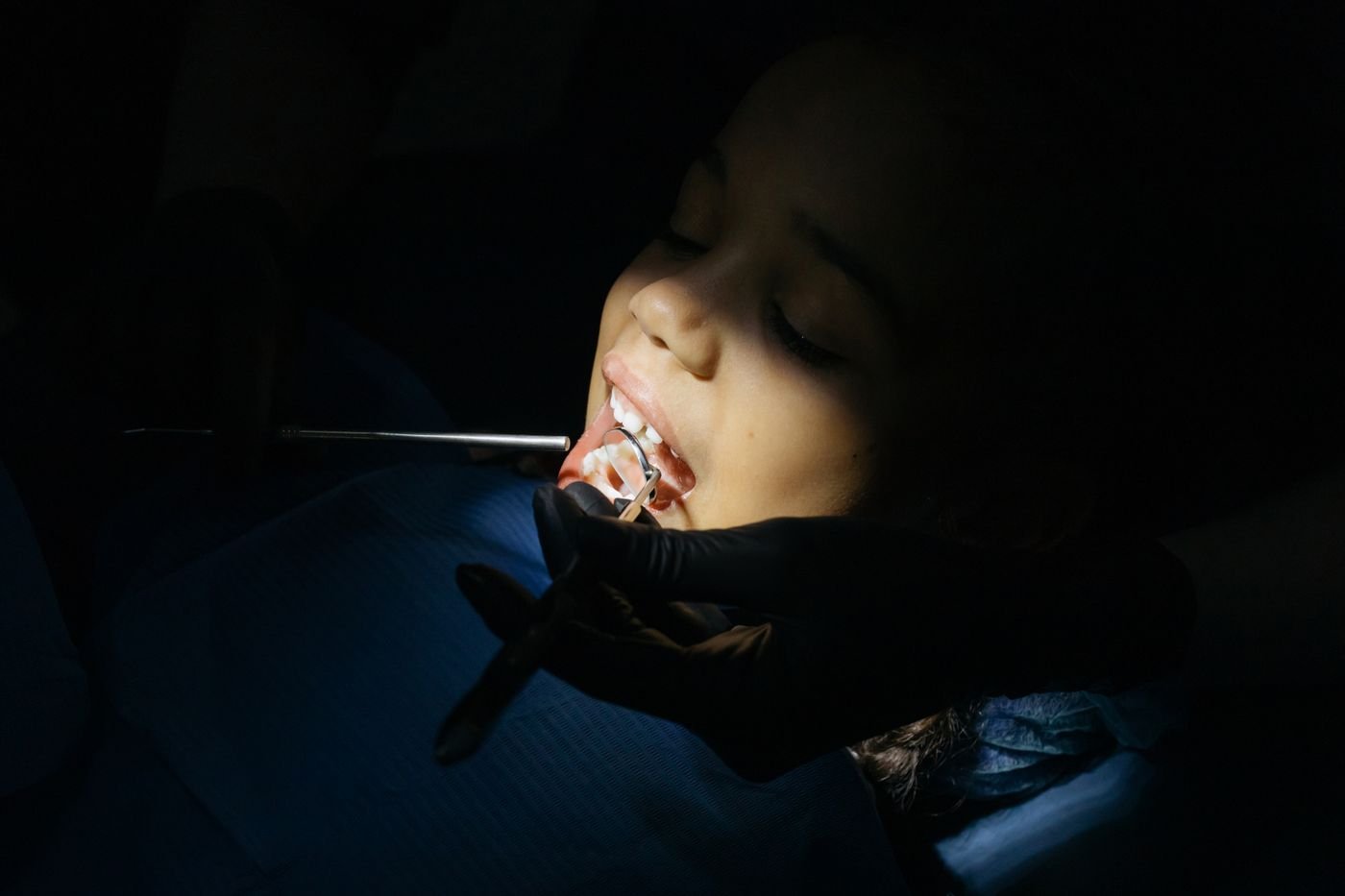
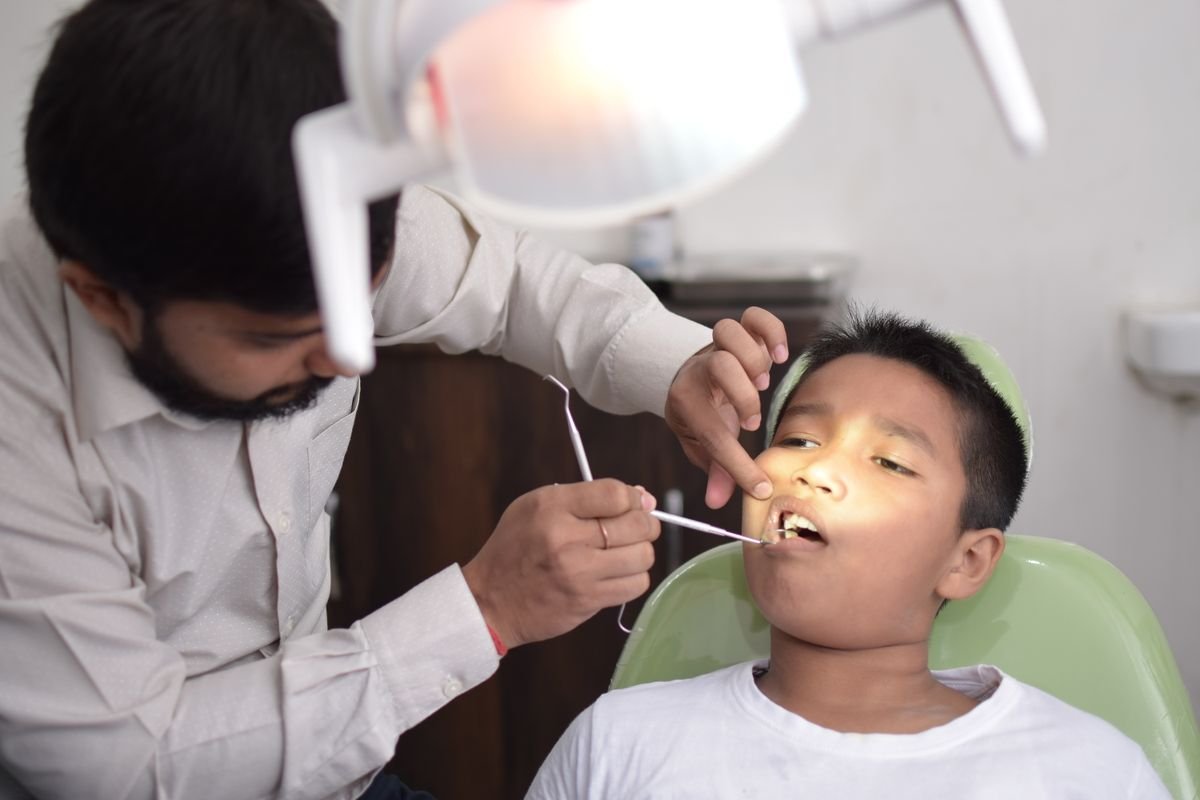
What Happens at a Baby’s First Dental Visit?
- Welcome and history: the team asks about your child’s health, feeding, and any concerns.
- Knee-to-knee exam: for babies and toddlers, the child often sits on the parent’s lap while the dentist gently looks inside the mouth.
- Teeth and gum check: the dentist looks for decay, plaque, and how teeth are erupting.
- Cleaning, if needed: a gentle wipe or brush to remove plaque.
- Fluoride advice or varnish: depending on risk, fluoride varnish may be applied.
- Home care coaching: parents learn brushing technique and the right amount of toothpaste.
- Next steps: a plan for future visits, usually every six months.
The visit is usually short, often under 30 minutes, and designed to be relaxed and positive.
A Child’s Dental Timeline
| Age | What Usually Happens | Dental Focus |
|---|---|---|
| 6 to 12 months | First teeth appear | First dental visit, wiping and brushing begins |
| 1 to 3 years | Most baby teeth erupt | Checkups, fluoride, weaning from bottles at night |
| 3 to 5 years | Full set of baby teeth | Cleanings, habit advice, early X-rays if needed |
| 6 to 8 years | First adult molars and front teeth | Sealants, monitoring tooth loss and spacing |
| 9 to 12 years | More adult teeth arrive | Orthodontic screening, sports mouthguards |
| Teens | Second and possibly third molars | Wisdom teeth monitoring, hygiene with braces |
How to Care for Your Child’s Teeth at Home
- Before teeth appear, wipe gums with a clean, damp cloth after feeds.
- Once teeth appear, brush twice daily with a soft, small toothbrush.
- For children under three, use a smear of fluoride toothpaste the size of a grain of rice if advised by your dentist, based on risk.
- From age three to six, use a pea-sized amount of fluoride toothpaste.
- Help with brushing until your child can do it well, usually around age seven or eight.
- Start flossing when teeth touch each other.
- Avoid putting your child to bed with a bottle of milk, formula, or juice.
- Offer water between meals and limit sugary snacks and drinks.
Safety note: keep toothpaste out of reach of young children and supervise brushing so they spit rather than swallow. If your child has facial swelling, fever with tooth pain, or a knocked-out tooth, seek urgent dental care.
Teething: What Is Normal and What Is Not?
Teething often begins around six months, although some babies get their first tooth earlier or later. It can make children fussy, drool more, and want to chew on everything.
- Normal: drooling, chewing, mild irritability, slightly swollen gums, and disturbed sleep for a few days.
- Helpful: a clean, chilled (not frozen) teething ring, gently rubbing the gums with a clean finger, and extra cuddles.
- Avoid: teething gels containing benzocaine for young children, amber necklaces, and anything that could be a choking hazard.
- Not caused by teething: high fever, diarrhea, or a rash. These need medical advice rather than being put down to teeth.
Dental Emergencies in Young Children
Toddlers fall often, and mouth injuries are common. Knowing what to do keeps you calm:
- Comfort your child and check for bleeding. Apply gentle pressure with clean gauze.
- If a baby tooth is knocked out, do not try to put it back, as this can damage the adult tooth underneath. Keep it and call the dental office.
- If a permanent tooth is knocked out, rinse it gently, try to place it back in the socket or keep it in milk, and seek care immediately.
- For a chipped tooth, save any fragments and book a prompt visit.
- Apply a cold compress to reduce swelling.
- Seek urgent medical care if your child hit their head, lost consciousness, or has bleeding that will not stop.
Even when an injury looks minor, a dental check is worthwhile. A knock can damage the nerve of a baby tooth, which sometimes turns grey weeks later, and the developing adult tooth beneath may also be affected.
Signs Your Child Should See a Dentist Sooner
- White, brown, or black spots on the teeth.
- Complaints of tooth pain or refusing to eat.
- Swollen or bleeding gums.
- A chipped or knocked tooth after a fall.
- Bad breath that does not go away.
- Teeth that seem very late or very early to erupt.
Remember that regular visits are not only about finding problems. They give parents a reliable place to ask questions about pacifiers, nutrition, toothbrushes, fluoride, and growth as the child develops. Many parents find that a short checkup every six months answers worries that would otherwise linger for months, and it keeps small issues from turning into treatment that a young child finds difficult.
How to Prepare Your Child for the First Visit
- Schedule a time when your child is usually rested, such as the morning.
- Use simple, positive words like “count your teeth” rather than “drill” or “hurt”.
- Read a children’s book or watch a short video about visiting the dentist.
- Bring a favourite toy or blanket for comfort.
- Stay calm yourself, as children often pick up on parents’ feelings.
- Avoid promising rewards for “being brave”, which can suggest something scary will happen.
Myths About Children’s Teeth
- Myth: “Baby teeth do not matter because they fall out.” Fact: they guide adult teeth into place and support speech and nutrition.
- Myth: “Children do not need a dentist until age three.” Fact: dental associations recommend a first visit by age one.
- Myth: “Fruit juice is a healthy drink for teeth.” Fact: juice contains natural sugars and acids that can contribute to decay.
- Myth: “Cavities in baby teeth do not need treatment.” Fact: untreated decay can cause pain, infection, and damage to developing adult teeth.
- Myth: “Thumb sucking always ruins teeth.” Fact: most children stop on their own. Prolonged habits past the age of four or five may affect tooth position and should be discussed.
Real Family Scenarios
The Night Bottle
Parents brought their two-year-old in after noticing chalky white marks on the front teeth. The child fell asleep with a milk bottle each night. With fluoride varnish, a change to water at bedtime, and improved brushing, the early decay was stopped before cavities formed.
The Nervous Toddler
A three-year-old cried at the first visit. The team kept it short and playful, counting teeth and letting the child hold a mirror. By the third visit, the child happily climbed into the chair.
The Sealant Success
A seven-year-old had deep grooves in new molars. Sealants were placed in a quick, painless visit, and the teeth remained cavity-free at later checkups.
Common Mistakes Parents Make
- Waiting until a problem appears before the first visit.
- Letting young children brush unsupervised too early.
- Offering sweet drinks in sippy cups throughout the day.
- Sharing spoons or cleaning a pacifier in the parent’s mouth, which can pass decay-causing bacteria.
- Skipping checkups once the child seems fine.
Why Choose an Experienced, Licensed Dental Team?
Children need a gentle approach, clear communication, and careful assessment of growing teeth and jaws. In Ontario, dentists must be registered with the Royal College of Dental Surgeons of Ontario (RCDSO), which sets standards for safe, ethical care. An RCDSO-registered team that sees children regularly can make early visits positive, accurate, and well followed up.
Family-Friendly Care at Dana Dental Aurora
Dana Dental Aurora is one of the most trusted names for families looking for a Dental Clinic in Aurora, with a 5.0 Google rating from more than 485 patient reviews. The clinic welcomes new patients and CDCP (Canadian Dental Care Plan) patients, and eligible children may be covered under the plan. New families can take advantage of the New Patient Special introductory package, and CareCredit financing is available to split treatment costs into manageable monthly installments.
Beyond pediatric dentistry, the clinic provides general dentistry, teeth cleaning, sealants, fillings, caps and crowns, dental implants, emergency dentistry, wisdom teeth removal, root canal therapy, sedation, cosmetic dentistry, bonding, veneers, teeth whitening, bridges, mouthguards, and nightguards. Flexible evening and weekend scheduling makes it easier to fit visits around school. If you are searching for a Family Dentist in Aurora, an Emergency Dental Clinic in Aurora for a sudden injury, a Cosmetic Dentist in Aurora for older family members, or advice on Dental Implants Aurora, call +1 (647) 494-5006, email info@danadentalaurora.ca, or visit 15277 Yonge St., Suite 1 & 2, Aurora, ON. Parents often describe it as the Best Dental Clinic in Aurora and a welcoming Dental Office in Aurora with a Top Dentist in Aurora. Every Dentist in Aurora on the team is RCDSO registered.
Frequently Asked Questions
Should my child see a pediatric dentist or a family dentist?
Both can provide excellent care. A family dentist experienced with children is often convenient because the whole family can be seen in one place.
When should my child start using fluoride toothpaste?
Fluoride toothpaste is generally used once teeth appear, in very small amounts for young children, based on your dentist’s assessment of decay risk.
How often should children see the dentist?
Most children benefit from a checkup every six months, though your dentist may suggest a different schedule based on risk.
Are dental X-rays safe for children?
Modern digital X-rays use very low radiation and are taken only when needed. Protective measures are used to keep exposure as low as possible.
What if my child is scared of the dentist?
Short, positive early visits help a lot. Tell the team about your child’s fears so they can adjust their approach and pace.
Conclusion
Your child’s first dental visit should happen by age one or within six months of the first tooth.
Early visits focus on prevention and help children feel relaxed about dental care.
Starting early protects baby teeth and sets up healthy habits for a lifetime.