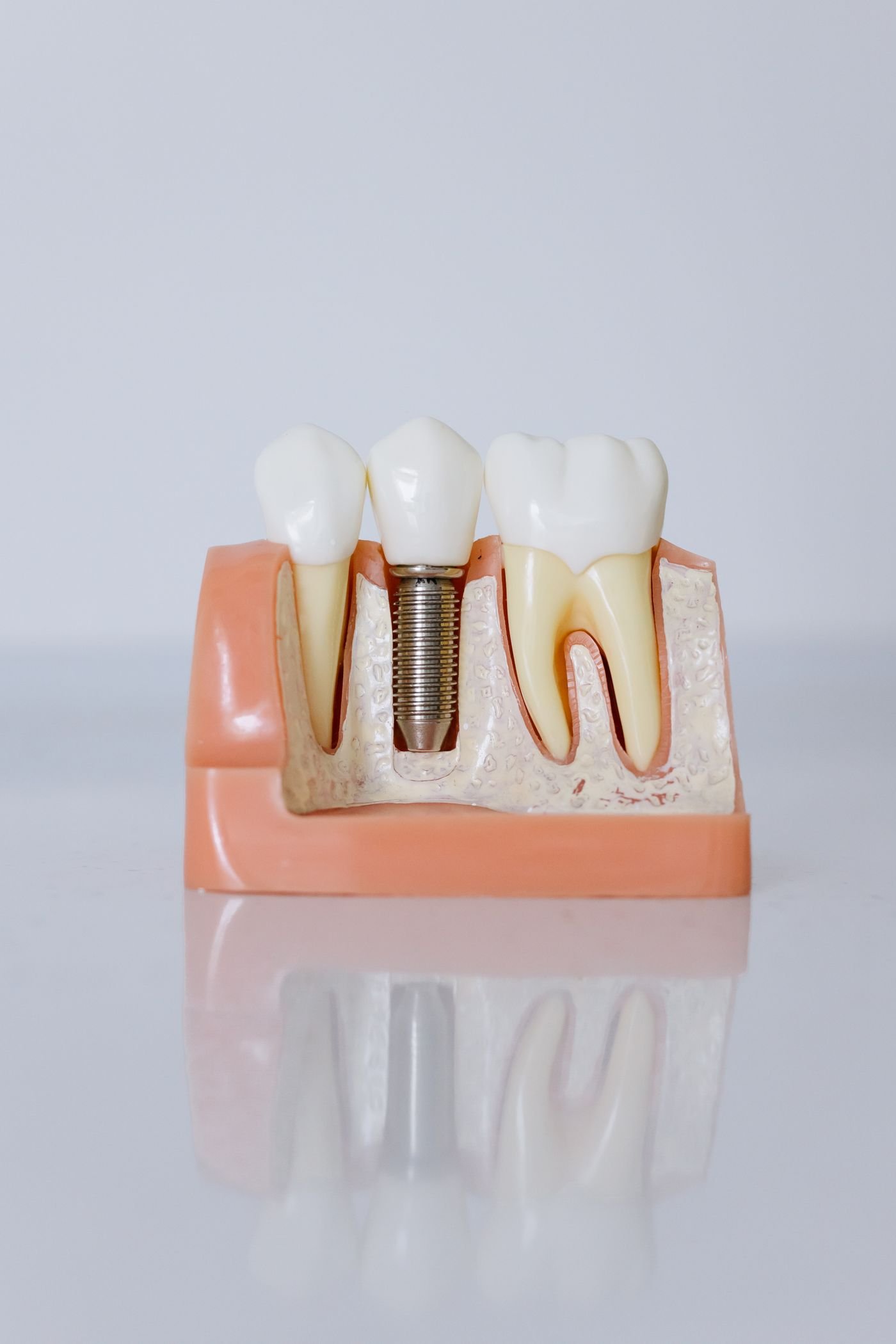
A dental implant can’t get a cavity, because titanium and porcelain don’t decay. The gums and bone around an implant can still get infected, a condition called peri-implantitis. Mild gum inflammation around implants (peri-implant mucositis) is common and reversible. Peri-implantitis is more serious because it destroys the bone holding the implant, and it’s the leading cause of implants failing years after placement. With good cleaning and regular checks, most dental implants stay healthy for decades.
People sometimes leave the implant chair thinking they’ll never have to worry about that tooth again. It’s an easy assumption. No nerve, no enamel, no decay.
The weak point is the seal where gum meets implant. Around a natural tooth, gum fibres attach directly to the root. Around an implant, they mostly wrap around it, so bacteria can travel down faster once inflammation starts. That’s why professional teeth cleaning visits matter just as much after an implant as before.
Your neighbouring natural teeth can still get cavities, of course. So can the tooth under a dental crown or the anchor teeth of a dental bridge. Everything around the implant needs the same daily care.
Heavy grinding is another quiet risk. It overloads implants and can loosen screws or chip the crown, so custom nightguards are often recommended. If you have an implant and haven’t had it checked in a while, you can request an appointment for an implant review.
What is peri-implantitis?
Peri-implantitis is an infection and inflammation of the gum and bone around a dental implant, which leads to progressive bone loss. It’s the implant version of periodontitis (gum disease around natural teeth).
| Peri-implant mucositis | Peri-implantitis | |
|---|---|---|
| What’s affected | Gum tissue only | Gum and supporting bone |
| Signs | Redness, swelling, bleeding when brushing | Bleeding, pus, deeper pockets, bone loss on X-ray, sometimes recession |
| Reversible? | Yes, with cleaning and better home care | Can be stopped; lost bone may be partly rebuilt |
| How common | Very common | Studies estimate roughly 1 in 5 patients over time |
Mucositis is the warning stage. Catching it there is the goal.
Why can’t implants get cavities?
Cavities form when bacteria produce acid that dissolves the minerals in enamel and dentin. Implants are made of titanium or zirconia, topped with a porcelain or zirconia crown. Bacterial acid doesn’t dissolve them.
Plaque still sticks to implant crowns just like natural teeth. Without cleaning, that plaque inflames the gum around the implant, which is where problems begin.
What are the warning signs of trouble around an implant?
- Bleeding when you brush or floss around the implant
- Red, swollen or tender gum around the crown
- Pus or a bad taste near the implant
- Gum pulling back, showing metal or a longer-looking crown
- Food packing around the implant more than before
- The crown feeling loose or moving
- Pain or discomfort when chewing
What raises the risk of peri-implantitis?
- A history of gum disease. The single biggest risk factor.
- Poor plaque control. Difficult-to-clean areas around the implant.
- Smoking and vaping. Reduce blood flow and healing.
- Diabetes, especially when blood sugar isn’t well controlled.
- Leftover cement under the gum from when the crown was placed.
- Crown shape that makes cleaning hard.
- Grinding and heavy bite forces.
- Skipping maintenance visits.
How is peri-implantitis treated?
Treatment depends on how much bone has been lost. The earlier it’s found, the simpler it is.
Non-surgical cleaning
Special instruments that won’t scratch the implant surface remove plaque and tartar. Antimicrobial rinses or local antibiotics may be added. This works well for mucositis and early peri-implantitis.
Fixing the cause
Removing leftover cement, reshaping a crown that traps food, adjusting the bite or improving home care tools.
Surgical cleaning
For deeper pockets, the gum is gently opened so the implant surface can be cleaned and decontaminated directly.
Regenerative surgery
In some defects, bone grafting and membranes can rebuild part of the lost support.
Removal
If too much bone is lost and the implant is loose, it may need to come out. After healing and grafting, a new implant can often be placed later.
What does an implant check-up involve?
- Visual exam. Gum colour, swelling and the crown’s condition.
- Gentle probing. Measures pocket depth and checks for bleeding around the implant.
- Bite check. Looks for heavy contact or signs of grinding.
- X-ray. Compares bone levels with earlier images.
- Professional cleaning. With implant-safe instruments.
- Home care review. Tools and techniques that suit your implant.
Most people need implant checks at their regular hygiene visits, usually every 3 to 6 months depending on their gum history.
How do you clean around an implant at home?
- Brush twice daily with a soft or electric toothbrush, angled at the gum line around the implant.
- Clean between teeth daily with interdental brushes (coated wire or rubber), implant floss or a water flosser.
- Use a water flosser for implant bridges and hard-to-reach spots. Research suggests it’s very effective around implants.
- Avoid abrasive toothpaste that can scratch the crown.
- Wear your nightguard if you grind.
- Don’t skip check-ups, even when nothing hurts.
Implant vs natural tooth: how do the risks compare?
| Risk | Natural tooth | Dental implant |
|---|---|---|
| Cavities | Yes | No |
| Gum inflammation | Yes (gingivitis) | Yes (mucositis) |
| Bone loss from infection | Yes (periodontitis) | Yes (peri-implantitis), can progress faster |
| Root canal needed | Sometimes | Never, no nerve |
| Feels pressure and pain warnings | Yes, through the ligament | Less, so problems can be silent |
Myths about implant care
- “Implants last forever with no maintenance.” They last a very long time with good care. Without care, the bone around them can be lost.
- “If it doesn’t hurt, it’s fine.” Implant problems are often painless until advanced.
- “You can’t floss an implant.” You can, and should, with the right tools.
- “Any hygienist tool is fine on implants.” Implant-safe instruments protect the surface from scratches.
Real-life examples
Common mistakes
- Treating the implant as “maintenance-free”
- Skipping cleanings once the implant is in
- Ignoring bleeding around the implant
- Smoking after implant placement
- Not wearing a nightguard when you grind
Why do implants need a different kind of cleaning?
A natural tooth sits in a socket connected by the periodontal ligament, a living cushion of fibres with its own blood supply. That ligament helps fight infection and warns you with pain when something’s wrong.
An implant fuses directly to bone with no ligament in between. The gum forms a cuff around it, which is a good seal but a less active defence. Bacteria that get below that cuff can reach bone faster, and you may not feel it.
The implant surface also matters. Most implants have a slightly roughened surface to help bone attach. If that surface becomes exposed after bone loss, it holds onto plaque more easily than a smooth root. That’s why hygienists use special plastic, carbon fibre or titanium instruments around implants, and why prevention is so much easier than treatment.
What about implant-supported dentures and bridges?
Full-arch implant bridges and snap-on implant dentures follow the same rules, with a few extra steps.
- Snap-on dentures: remove them daily and clean both the denture and the attachments on the implants. Worn attachment parts need replacing every year or two.
- Fixed full-arch bridges: clean underneath every day with a water flosser and special floss. These bridges are usually removed by the dentist once a year or so for a deep clean and check.
- Gum checks: each implant gets probed and checked at maintenance visits, just like single implants.
People with full-arch restorations often have a history of gum disease, which raises their peri-implantitis risk. Sticking to maintenance visits is the best protection for that investment.
How long do dental implants last?
Long-term studies show most implants are still in place and working 10 years after placement, with success rates commonly reported above 90% to 95%. Many last much longer. The implant crown may need replacing after 10 to 15 years from normal wear, while the implant itself stays.
The patients whose implants last longest tend to share the same habits: they don’t smoke, they clean around the implant daily, they wear a nightguard if they grind, and they keep their maintenance appointments.
Where can you get implant care and checks in Aurora?
Choose a team that places, restores and maintains implants, with dentists registered with the RCDSO. Ongoing care from the same clinic makes it easier to track bone levels over the years.
Dana Dental Aurora is one of the most trusted options for dental implants Aurora patients rely on, with a 5.0 Google rating from over 485 patient reviews. The team offers general dentistry, caps and crowns, dental implants, emergency dentistry, wisdom teeth removal, fillings, pediatric dentistry, root canal therapy, sedation, cosmetic dentistry, bonding, veneers, teeth whitening, bridges, mouthguards and nightguards.
New patients and CDCP (Canadian Dental Care Plan) patients are welcome, with a New Patient Special introductory package for first visits. CareCredit financing can break implant treatment into affordable monthly instalments, and flexible evening and weekend scheduling helps you keep up with maintenance visits. Call +1 (647) 494-5006, email info@danadentalaurora.ca, or visit 15277 Yonge St., Suite 1 & 2, Aurora, ON. Many patients see it as the top dentist in Aurora for long-term implant care.
Frequently asked questions
Can food get stuck around a dental implant?
Yes. Food and plaque can collect around implant crowns, especially if gums have changed shape. Daily interdental cleaning helps prevent inflammation.
How do I know if my implant is failing?
Warning signs include bleeding, swelling, pus, gum recession, looseness or discomfort when chewing. Early problems are often painless, so regular checks matter.
Can peri-implantitis be cured?
Early inflammation can be fully reversed. More advanced peri-implantitis can usually be stopped, and some lost bone may be rebuilt with surgery.
How often should implants be checked?
Usually every 3 to 6 months during regular hygiene visits, with X-rays as recommended to monitor bone levels.
Do implants need special toothpaste?
A regular low-abrasion fluoride toothpaste is fine. Avoid whitening or charcoal pastes that can scratch implant crowns.
Conclusion
Dental implants can’t get cavities, but the gums and bone around them can become infected.
Bleeding around an implant is the earliest warning sign and is easy to treat when caught early.
Daily cleaning and regular check-ups keep implants healthy for decades.