
Yes, many dental clinics let you pay for treatment in monthly installments, usually through a third-party financing program such as CareCredit, by phasing treatment over time, or by combining insurance or CDCP coverage with a payment plan. Putting off needed care because of cost is very common, but it often turns small problems into bigger, more involved ones. Asking about payment options is a normal part of planning treatment, and our New Patient Offer page is a good place to start if you’re new.
Nobody likes surprises at the front desk. Many people delay a crown, an implant or even a filling simply because they don’t know how they’d manage the bill. At Dana Dental Aurora, we’d much rather talk openly about options before treatment than see someone wait until a tooth breaks.
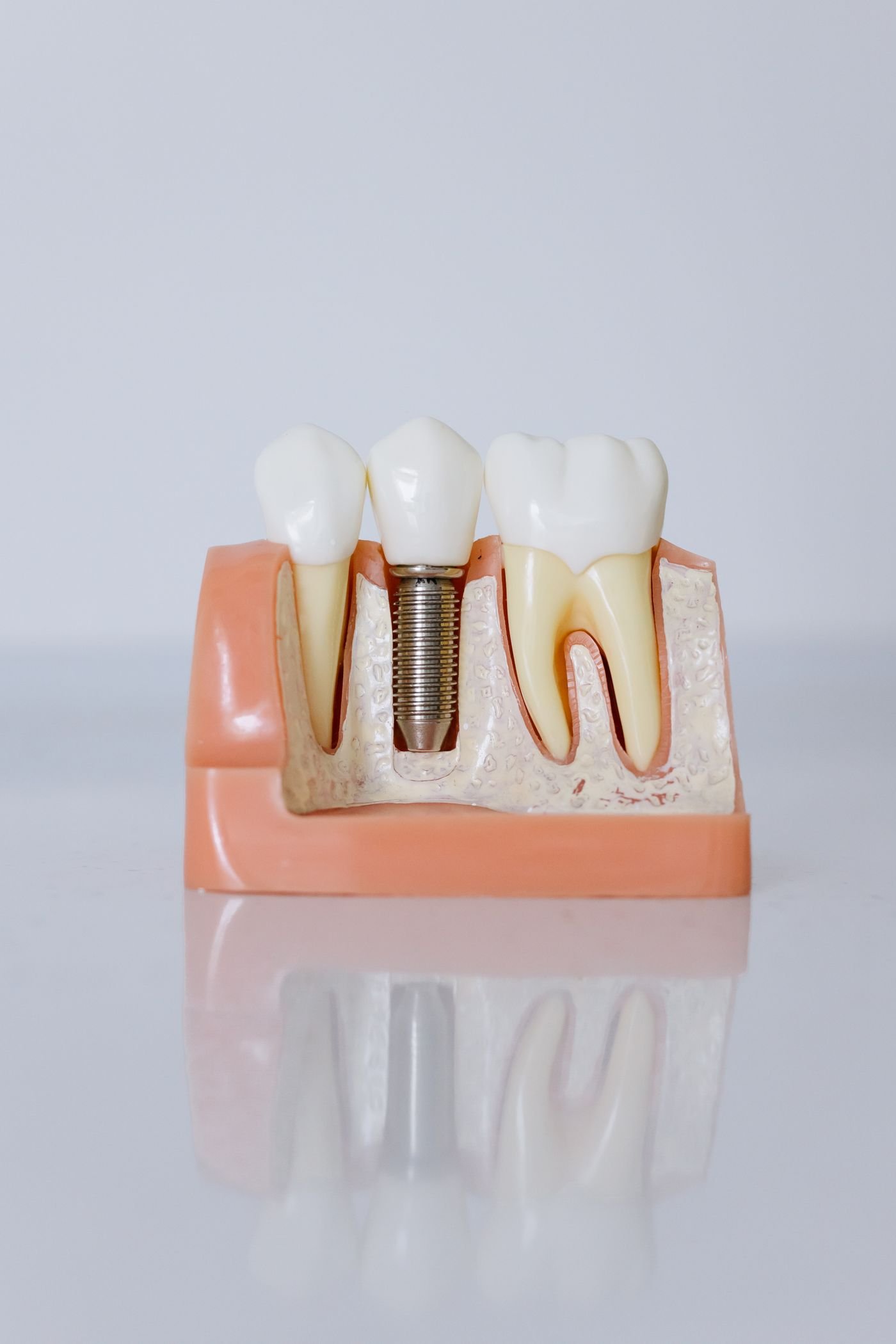
Larger treatments like dental implants or a set of caps and crowns are where monthly installments make the biggest difference, because the cost is spread out while you get the benefit right away.
When you’re ready, you can request an appointment online and ask our team to walk you through coverage and financing at the same visit.
What is dental financing?
Dental financing is a way to pay for dental treatment over time instead of all at once, usually through a third-party lender or healthcare credit program that pays the clinic while you repay in monthly installments.
Programs like CareCredit are designed for health-related expenses. Approval, terms and any interest depend on the provider and your application, so it’s worth reading the details carefully.
What are your payment options for dental care?
1. Dental insurance
Workplace and private plans often cover a percentage of preventive, basic and major treatment, usually up to an annual maximum.
2. Canadian Dental Care Plan (CDCP)
The federal CDCP helps eligible Canadians without private dental insurance pay for a range of dental services. Coverage depends on eligibility and the services covered by the plan; some services may involve a co-payment.
3. Third-party financing (such as CareCredit)
You apply, and if approved, the provider pays the clinic. You repay in monthly installments according to the agreement.
4. Phased treatment
Your dentist prioritizes urgent work first and schedules less urgent treatment over months, which spreads costs and can line up with insurance renewal dates.
5. Health spending accounts
Some employers offer health spending accounts that can be used for dental expenses not covered by insurance.
6. Tax credits
Eligible medical and dental expenses may be claimed on your Canadian income tax return. Keep your receipts and check current CRA rules or ask an accountant.
Payment options compared
| Option | Best for | Things to check |
|---|---|---|
| Insurance | Routine care and partial coverage of bigger work | Annual maximums, waiting periods, frequency limits |
| CDCP | Eligible people without private coverage | Eligibility, covered services, any co-payment |
| Financing (CareCredit) | Larger treatment you’d like to start now | Approval, terms, interest, promotional periods |
| Phased treatment | Multiple treatments that can be spaced out | Which items can safely wait |
| Health spending account | Out-of-pocket balances | Annual limits and eligible expenses |
How does financing work at a dental clinic? (step by step)
- Exam and diagnosis: you get a clear treatment plan with each item explained.
- Written estimate: a breakdown by procedure, so you know what you’re financing.
- Insurance or CDCP check: the team can often send a pre-determination to see what’s covered.
- Financing application: if you choose it, you apply with the financing provider.
- Review terms: read the monthly amount, length, interest and any promotional conditions.
- Schedule treatment: once approved, your treatment can begin.
- Repay monthly: payments go to the financing provider, not the clinic.
Which treatments do people usually finance?
- Dental implants and implant-supported bridges
- Caps and crowns, especially several at once
- Root canal treatment followed by a crown
- Bridges and dentures
- Veneers and cosmetic makeovers
- Wisdom teeth removal with sedation
- Full mouth rehabilitation
Why delaying treatment can cost more later
| If you wait on… | It can become… |
|---|---|
| A small cavity | A large filling, root canal or crown |
| A cracked tooth | A split tooth needing extraction and replacement |
| Gum inflammation | Periodontitis needing deep cleaning or surgery |
| A missing tooth | Bone loss and shifting teeth, making implants more complex |
Spreading payments can help you treat problems while they’re still small, which is usually better for your health and your budget.
Questions to ask before choosing financing
- What’s the total treatment cost, item by item?
- How much will insurance or CDCP cover?
- What are the monthly payments and for how long?
- Is there interest, and when does it apply?
- Are there penalties for late or early payments?
- Can treatment be phased instead?
- Which items are urgent and which can wait safely?
Please note: this article is general information, not financial advice. Financing terms, approval and interest are set by the provider, not the dental clinic. Read every agreement carefully and consider speaking with a financial advisor if you’re unsure. For dental questions, always get a personal assessment from a licensed dental professional.
Dental insurance terms in plain language
- Deductible: the amount you pay each year before your plan starts paying.
- Co-insurance: the percentage your plan pays, for example a share of basic services, with you paying the rest.
- Annual maximum: the most your plan pays in a benefit year.
- Frequency limits: how often a service is covered, like cleanings every 6 or 9 months.
- Pre-determination: an estimate sent to your insurer before treatment so you know what they’ll cover.
- Fee guide: the reference schedule many insurers use to calculate their portion.
- Waiting period: time after joining a plan before some services are covered.
Knowing these terms makes it much easier to understand your estimate and plan the timing of treatment.
How to read your treatment estimate
- Check each line: every procedure should have its own code and description.
- Look at the order: urgent items should be marked or listed first.
- Compare coverage: see which lines insurance or CDCP is expected to cover.
- Ask about alternatives: sometimes there’s a different material or approach.
- Confirm timing: which visits happen when, and what’s due at each one.
Is financing right for you?
Financing can be a good fit when:
- You need treatment soon and waiting would make it more involved
- Your insurance or CDCP covers part, but not all, of the cost
- Monthly payments fit comfortably within your budget
- You understand the full terms, including any interest after promotional periods
It may not be the best fit if payments would stretch your budget or you’re unsure about the terms. In that case, phased treatment or waiting for a new benefit year might be better. Your dental team can help you think it through without pressure.
What if your situation changes mid-treatment?
Life happens. If your job, coverage or budget changes partway through a treatment plan, tell the clinic early. Many plans can be paused safely between stages, temporary restorations can protect teeth in the meantime, and the remaining steps can be rescheduled. Open communication keeps your teeth protected while you sort things out.
Myths about dental costs and financing
“Financing is only for expensive cosmetic work.”
Many people use it for necessary treatment like crowns, root canals and implants.
“If I can’t pay today, I should wait.”
Waiting often means more involved treatment later. Ask about phasing and financing first.
“CDCP covers everything.”
CDCP covers many services for eligible people, but not all treatments, and some may involve co-payments. The clinic can help you check.
“Asking about payment is awkward.”
Dental teams discuss this every day. A good clinic welcomes the question.
Does financing change the quality of care?
No. How you pay has nothing to do with the materials, the time spent or the care you receive. Your treatment plan should be based only on what your mouth needs and what you choose after hearing the options. If anyone pushes extra treatment because financing makes it “easy,” that’s a signal to ask more questions or get a second opinion.
A real-world example
An Aurora parent had a cracked molar and 2 old fillings that needed replacing, but he’d been putting it off for a year. At his visit, the team sent a pre-determination to his insurer, prioritized the cracked tooth for a crown, and scheduled the fillings 3 months later in the new benefit year.
He used financing for the remaining balance on the crown. He said knowing the plan in advance took the stress out of it, and the cracked tooth was saved before it split.
Common mistakes people make with dental costs
- Letting unused insurance benefits expire at year-end
- Skipping cleanings to save money, then needing bigger work later
- Starting treatment without a written estimate
- Signing a financing agreement without reading the interest terms
- Not asking whether treatment can be phased
- Assuming you don’t qualify for CDCP without checking
Avoiding these simple mistakes often saves more than any discount would.
How the front desk team can help
Dental administrative teams handle insurance claims, pre-determinations, CDCP questions and financing applications every day. Bring your insurance card and any plan booklet to your visit, and ask them to explain anything that’s unclear. They’d rather spend 10 minutes answering questions than have you worry about a bill.
Tips to make dental care more affordable
- Keep up with checkups and cleanings to catch problems early
- Use your insurance benefits before they reset each year
- Ask about CDCP eligibility
- Phase treatment when it’s safe
- Wear a mouthguard or nightguard to prevent costly damage
- Ask for written estimates before treatment
Flexible care at Dana Dental Aurora
If you’re looking for a Dental Office in Aurora that’s upfront about options, Dana Dental Aurora is one of the most trusted clinics in town, with a 5.0 Google rating and over 485 patient reviews. We accept new patients and CDCP (Canadian Dental Care Plan) patients, and offer a New Patient Special introductory package.
We also offer CareCredit financing, which lets eligible patients break treatment costs into affordable monthly installments. All care is provided by licensed dental professionals registered with the Royal College of Dental Surgeons of Ontario (RCDSO).
Our services include general dentistry, caps and crowns, Dental Implants Aurora patients trust, emergency dentistry, wisdom teeth removal, fillings, pediatric dentistry, root canals, sedation, cosmetic dentistry, bonding, veneers, teeth whitening, bridges, mouthguards and nightguards.
Visit us at 15277 Yonge St., Suite 1 & 2, Aurora, ON, call +1 (647) 494-5006, or email info@danadentalaurora.ca. Evening and weekend appointments are available, and our team responds quickly to questions about coverage and scheduling.
Frequently asked questions
Does Dana Dental Aurora offer payment plans?
Yes. Dana Dental Aurora offers CareCredit financing, which lets eligible patients pay for treatment in monthly installments. Approval and terms are set by the financing provider.
Can I use CDCP with financing?
In many cases, yes. CDCP may cover part of eligible services, and financing can help with any remaining balance. The clinic can help you check what’s covered.
Does applying for dental financing affect my credit?
Applying for credit can involve a credit check, which may affect your credit score. Ask the financing provider how their application process works before you apply.
Can I finance emergency dental treatment?
Often, yes. Financing can be used for urgent treatment like root canals, extractions and crowns, subject to approval by the provider.
What if I can’t afford all my treatment at once?
Ask your dentist to prioritize urgent items and phase the rest. Combining phased treatment with insurance, CDCP or financing makes care more manageable.
Conclusion
Yes, you can often pay for dental treatment in monthly installments through financing like CareCredit, phased treatment, and insurance or CDCP coverage. Treating problems early usually keeps care simpler. Ask for a clear estimate and review every option before you start.