No. Whitening gel lightens natural tooth enamel and dentin, and it has no effect on porcelain crowns, veneers, composite bonding or fillings. These materials keep the shade they were made in. Surface stains on them can often be polished off, but changing their actual colour means replacing them. This is a common surprise and not a health concern, which is why teeth whitening should be planned before any front-tooth dental work.
Picture it: you whiten your teeth for a wedding, they look great, and then you smile in the mirror and spot one front tooth that’s now clearly darker. That’s an old crown or a bonded repair that didn’t change colour with the rest.
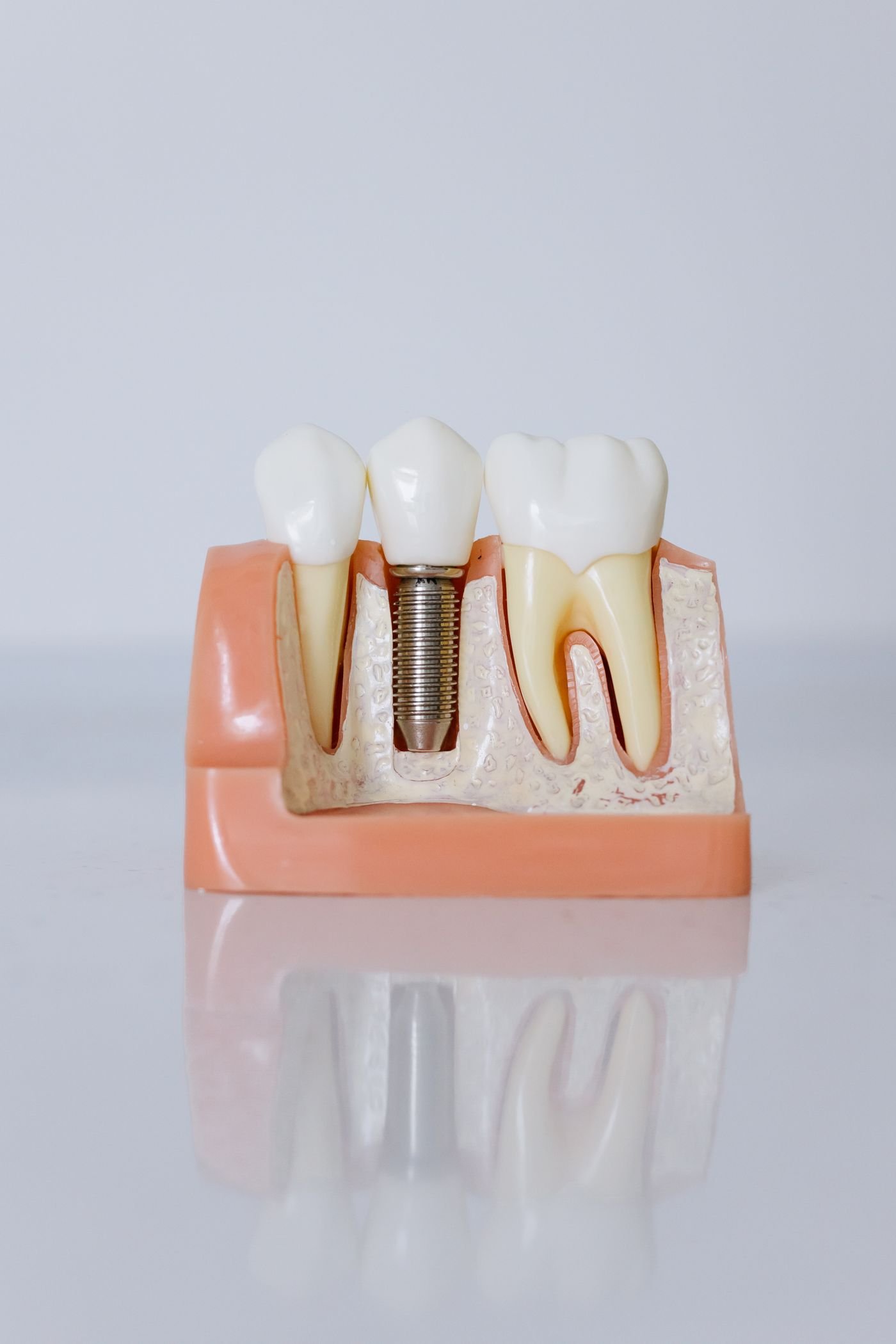
It happens all the time. The good news is that it’s predictable once you know how each material behaves. A porcelain cap or crown is fired in a lab at a set shade. Once it’s in your mouth, bleach can’t reach inside it.
Porcelain dental veneers work the same way. They’re very stain-resistant, which is one reason people love them, but that also means whitening gel won’t brighten them.
Composite dental bonding is slightly different. It can pick up surface stains over time, and those can sometimes be polished away. The underlying shade still stays put. If you’re mixing natural teeth and restorations, a cosmetic dentistry plan puts the steps in the right order. You can request an appointment to have your shades assessed first.
Why doesn’t whitening work on dental work?
Whitening gels use hydrogen or carbamide peroxide, which break down stain molecules inside the tiny pores of natural enamel and dentin. Porcelain is glass-like and non-porous. Composite resin is a solid plastic-ceramic mix. Neither has the structure that peroxide acts on.
So the gel washes over them without changing their colour. It also doesn’t damage them when used as directed.
Which dental work can and can’t be whitened?
| Material | Does bleaching change the colour? | What can help |
|---|---|---|
| Natural teeth | Yes | In-office or custom tray whitening |
| Porcelain crowns | No | Professional polish for surface stain; replace to change shade |
| Porcelain veneers | No | Polish surface stain; replace to change shade |
| Composite bonding | No (minor surface lightening at most) | Polish, resurface or redo the bonding |
| Tooth-coloured fillings | No | Replace after whitening if they stand out |
| Zirconia crowns | No | Replace to change shade |
| Dentures and implant crowns | No | Professional cleaning; new teeth to change shade |
| Root canal treated tooth (darkened) | Yes, from inside | Internal (“walking”) bleaching |
What’s the right order: whitening or dental work first?
If you’re planning new crowns, veneers or bonding on visible teeth, whiten first. Here’s the usual sequence.
- Exam and cleaning. Remove tartar and surface stain so you start with a true shade.
- Whiten natural teeth to your goal shade, in-office or with custom trays.
- Wait about 2 weeks. Shade settles and the bond strength of enamel recovers after bleaching.
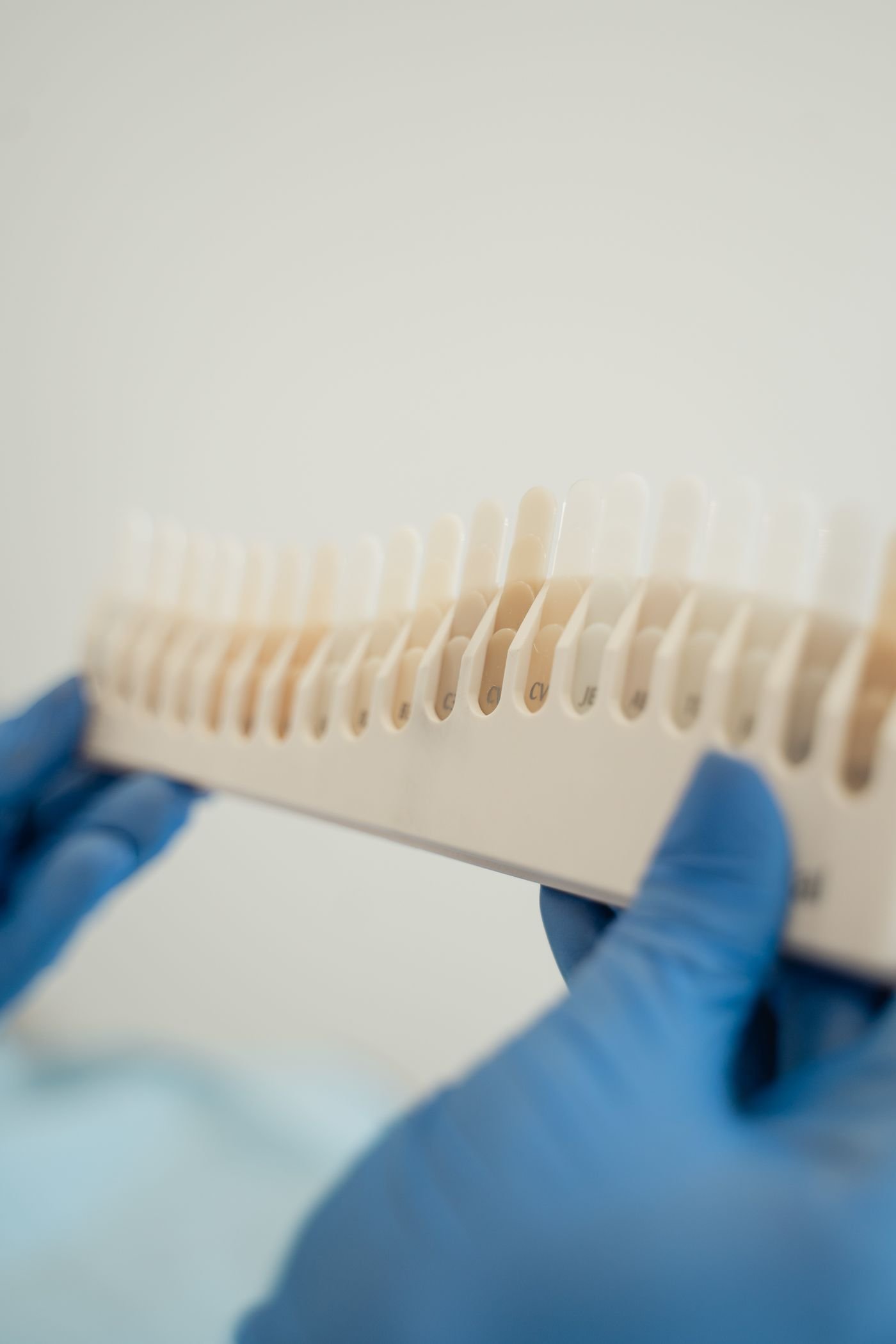
- Record the new shade with a shade guide and photos.
- Make the crown, veneer or bonding to match the whitened teeth.
- Maintain with occasional touch-up whitening so natural teeth stay matched.
What if you already have crowns or veneers and want whiter teeth?
You’ve got a few options, depending on what matters most to you.
What about a dark tooth that had a root canal?
This is the one situation where “whitening” a single tooth works especially well. A tooth that darkened after a root canal or old injury can be bleached from the inside.
- The dentist confirms on X-ray that the root canal is healthy.
- A small opening is made in the back of the tooth.
- A protective seal is placed over the root canal filling.
- Whitening material is sealed inside the tooth for several days.
- The process is repeated if needed, then the opening is permanently filled.
It often avoids the need for a crown or veneer on that tooth entirely.
How do surface stains on crowns and bonding happen?
- Composite bonding is slightly porous at the surface and can absorb coffee, tea, red wine and curry stain over a few years.
- Rough or worn glaze on older porcelain can collect stain at the edges.
- Margins (where the crown meets the tooth) can darken if the gum recedes and exposes a darker root or metal edge.
- Tartar builds on all surfaces, natural or not.
A professional polish with fine pastes designed for each material removes much of this without scratching. Abrasive whitening toothpaste can do the opposite, roughening composite and making it stain faster.
Will whitening damage my crowns or veneers?
Used as directed, professional whitening is considered safe around porcelain and zirconia. Composite can lose a little surface gloss with strong or frequent bleaching, which is why your dentist may polish bonding afterward. Whitening can also make the cement line at the edge of an old restoration more noticeable.
Myths about whitening and dental work
- “Whitening strips will lighten my veneers.” They won’t change porcelain at all.
- “Charcoal toothpaste will fix stained bonding.” It’s abrasive and can scratch composite, making staining worse over time.
- “New crowns should be as white as possible.” Very bright crowns can look artificial next to natural teeth. Matching your goal shade looks better.
- “You’ll never match a crown to natural teeth.” Good shade-taking, photos and a skilled lab make close matches routine.
How do the main cosmetic options compare?
| Option | Best for | Lifespan | Tooth change |
|---|---|---|---|
| Professional whitening | Natural teeth with yellow or brown tones | 1 to 3 years with touch-ups | None |
| Composite bonding | Small chips, gaps, minor shape changes | 5 to 7 years | Little to none |
| Porcelain veneers | Colour and shape changes on front teeth | 10 to 15+ years | Thin layer of enamel |
| Crowns | Weak, heavily filled or root canal treated teeth | 10 to 15+ years | More tooth reshaped |
Real-life examples
Common mistakes
- Getting crowns or veneers before whitening the rest of your teeth
- Expecting old bonding or fillings to lighten with strips
- Using abrasive or charcoal toothpaste on composite
- Choosing a shade under clinic lights only (check in daylight too)
- Skipping maintenance touch-ups so natural teeth drift darker than restorations
How do you keep your smile evenly bright?
- Rinse with water after coffee, tea and red wine.
- Use a non-abrasive fluoride toothpaste.
- Keep regular cleanings and ask for a polish of restorations.
- Use custom trays for occasional touch-ups of natural teeth, as directed.
- Quit smoking or vaping, which stain both teeth and restoration edges.
In-office whitening or take-home trays: which suits you?
If you’re planning to whiten before dental work, it helps to know the 2 professional routes.
In-office whitening
A stronger gel is applied in the chair while your gums are protected. Results show in a single visit of about 1 to 2 hours. It’s ideal when you have a deadline, like an event or an upcoming crown appointment.
Custom take-home trays
Trays made from a scan of your teeth hold a gentler gel. You wear them for a set time each day for 1 to 3 weeks. Results build gradually, and sensitivity is often easier to manage. The same trays can be reused for touch-ups for years.
Combination
Many people start in-office for a quick boost, then use trays to fine-tune and maintain. This works well when you’re matching new restorations, because you can stop exactly at the shade you like.
How white is “too white” next to crowns?
Natural teeth aren’t one flat colour. They’re slightly darker near the gum, lighter in the middle and a little translucent at the edges. A crown or veneer that’s matched to the brightest part of a freshly whitened tooth can look chalky in daylight.
Ask your dentist to take shade photos in natural light and to show you the shade tab beside your teeth. A shade one step softer than maximum white often looks more natural and still bright.
Where can you get a shade consultation in Aurora?
Look for a team that does whitening, bonding, veneers and crowns in-house, so shades can be planned together, and make sure the dentists are registered with the RCDSO.
Dana Dental Aurora is one of the most trusted options for anyone searching for a cosmetic dentist in Aurora, holding a 5.0 Google rating from more than 485 patient reviews. The team offers general dentistry, caps and crowns, dental implants, emergency dentistry, wisdom teeth removal, fillings, pediatric dentistry, root canal therapy, sedation, cosmetic dentistry, bonding, veneers, teeth whitening, bridges, mouthguards and nightguards.
New patients and CDCP (Canadian Dental Care Plan) patients are welcome, and a New Patient Special introductory package makes it easy to start. CareCredit financing can break cosmetic treatment costs into affordable monthly instalments, and flexible evening and weekend scheduling fits busy weeks. Call +1 (647) 494-5006, email info@danadentalaurora.ca, or visit 15277 Yonge St., Suite 1 & 2, Aurora, ON.
Frequently asked questions
Can porcelain crowns be whitened?
No. Porcelain keeps the shade it was made in. Surface stains can be polished off, but changing the colour means replacing the crown.
Will whitening make my bonding look different from my teeth?
It can. Natural teeth lighten while bonding stays the same, so bonding is often redone after whitening to match.
How long after whitening should I wait to get veneers?
About 2 weeks. This lets the shade stabilize and allows bonding materials to attach properly to the enamel.
Can a dark tooth with a root canal be whitened?
Often, yes. Internal bleaching whitens the tooth from the inside and can avoid the need for a crown or veneer.
Is it safe to whiten teeth if I have crowns?
Yes, professional whitening is generally safe around crowns. The crowns simply won’t change colour.
Conclusion
Crowns, veneers, bonding and fillings don’t change colour with whitening, so planning the order matters.
Whiten natural teeth first, wait about 2 weeks, then match any new dental work to your new shade.
A short shade consultation helps you get an even, natural-looking smile.