You are usually a good candidate for dental implants if you are an adult with one or more missing teeth, healthy gums, enough jawbone to support an implant (or are willing to have bone grafting), and general health that allows normal healing. Smoking, uncontrolled diabetes, and untreated gum disease raise the risk of problems but do not always rule implants out. At Dana Dental Aurora, candidacy is confirmed with a full exam and 3D imaging before any treatment is recommended.
Missing teeth are very common in adults, and replacing them is rarely an emergency. Still, waiting has a cost: the jawbone under a gap slowly shrinks, and neighbouring teeth can tip into the space. Our dental implants in Aurora are designed to stop that bone loss while giving you a tooth that looks and feels natural.
Some people become implant candidates after a failing tooth is removed. If a tooth is cracked below the gumline or badly infected, our tooth extraction services can remove it gently and, in some cases, preserve the socket for a future implant. For anyone who is not ready for surgery, dental bridges remain a proven alternative.
Cost and nerves are the two concerns we hear most often. We offer CareCredit financing to spread treatment into manageable monthly instalments, and our sedation dentistry options help anxious patients stay relaxed. First-time visitors can take advantage of our new patient offer to start with a thorough assessment.
What Is a Dental Implant?
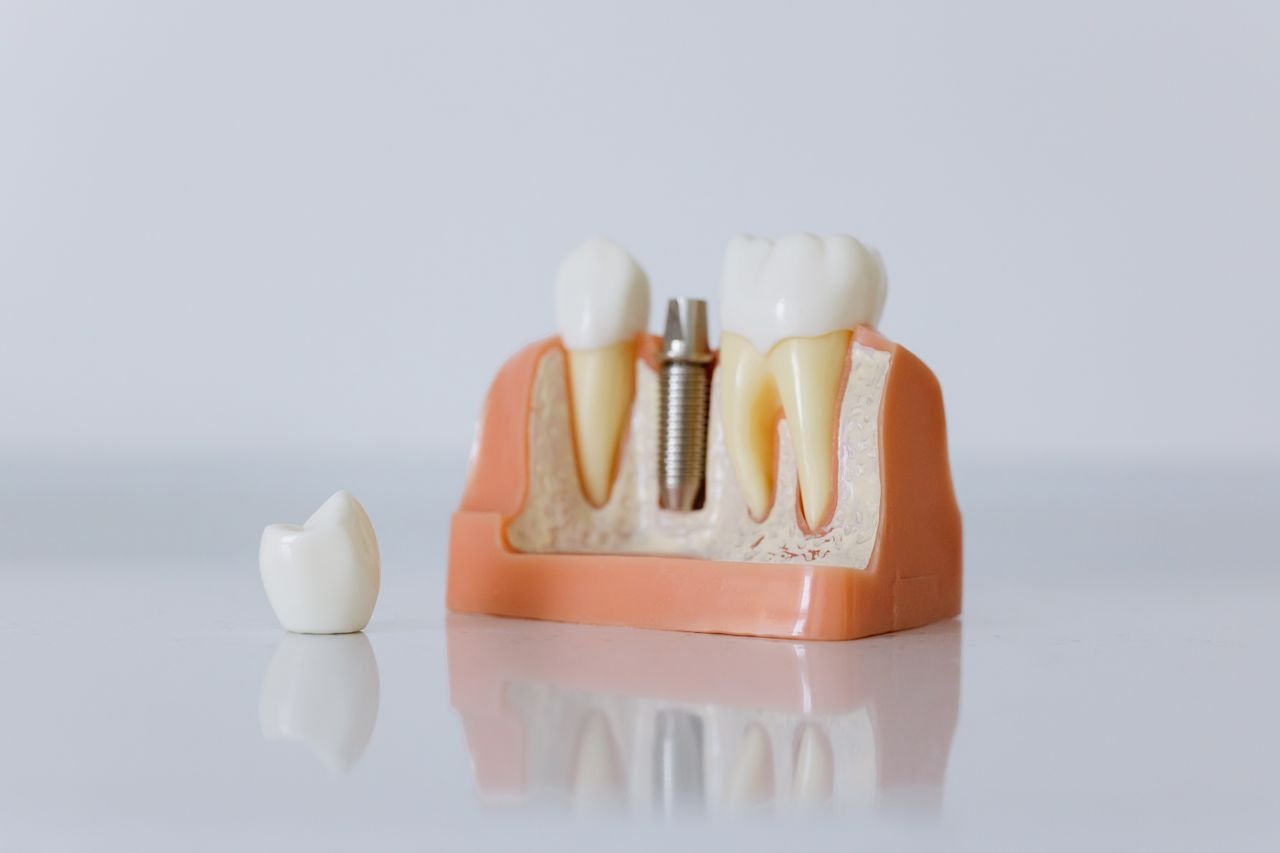
A dental implant is a small post, usually made of titanium, that is surgically placed in the jawbone to replace the root of a missing tooth. Over a few months, the bone bonds to the surface of the post in a process called osseointegration. An abutment and a custom crown are then attached, creating a replacement tooth that functions much like a natural one.
Implants can replace a single tooth, support a bridge for several missing teeth, or anchor a full-arch denture.
Who Is an Ideal Candidate for Dental Implants?
The strongest candidates usually meet most of these criteria:
- Adults with completed jaw growth, generally late teens or older.
- Healthy gums with no active periodontal disease, or disease that has been treated and stabilized.
- Adequate bone height and width at the implant site, or the ability to have grafting.
- Good general health, with chronic conditions well controlled.
- Non-smokers, or people willing to stop around the time of surgery.
- Commitment to oral hygiene and regular dental visits.
What Factors Can Make Implants Riskier?
Smoking and Vaping
Nicotine reduces blood flow and slows healing. Smokers have higher rates of implant failure and peri-implantitis, an infection around the implant.
Uncontrolled Diabetes
High blood sugar can impair healing and increase infection risk. People with well-managed diabetes are often good candidates.
Active Gum Disease
Bacteria that cause gum disease can also attack the tissues around an implant. Gum health must be restored first.
Low Bone Volume
Bone shrinks after tooth loss, especially over many years. Grafting or sinus lift procedures can often rebuild it.
Certain Medications
Some medications that affect bone metabolism, such as certain osteoporosis drugs taken by injection, or long-term steroids, may affect healing. Your dentist will review your medication list carefully.
Radiation Therapy to the Head and Neck
Previous radiation can affect bone healing and requires special planning, often with medical consultation.
Heavy Grinding
Bruxism places extra force on implants. A custom nightguard is usually recommended after treatment.
Can You Get Implants If You Have Bone Loss?
Often, yes. Several techniques can make implants possible when bone is limited:
- Bone grafting: adding graft material to rebuild width or height.
- Socket preservation: placing graft material right after an extraction to limit shrinkage.
- Sinus lift: raising the sinus floor to create room for implants in the upper back jaw.
- Angled or shorter implants: designed to use existing bone more efficiently.
These procedures may add healing time, but they greatly expand who can receive implants.
Is There an Age Limit for Dental Implants?
There is no upper age limit. Many patients in their 70s, 80s, and beyond receive implants successfully. Overall health and bone quality matter far more than the number of candles on your birthday cake. The lower limit is based on jaw growth, since implants placed too early do not move with growing bone.
How Is Implant Candidacy Assessed?
- Medical and dental history: reviewing conditions, medications, smoking, and past dental treatment.
- Clinical exam: checking gums, remaining teeth, bite, and the space to be filled.
- 3D imaging: a cone beam scan measures bone and maps nerves and sinuses.
- Gum assessment: measuring pocket depths to confirm periodontal health.
- Treatment planning: discussing implant options, grafting needs, timeline, and alternatives.
- Financial planning: reviewing insurance, CDCP eligibility where applicable, and financing options.
Implants vs. Bridges vs. Dentures: How Do They Compare?
| Factor | Dental Implant | Fixed Bridge | Removable Denture |
|---|---|---|---|
| Preserves jawbone | Yes | No | No |
| Affects neighbouring teeth | No | Yes, they are reshaped | Partials may rest on them |
| Feels like a natural tooth | Very close | Close | Less natural |
| Treatment time | Several months | A few weeks | A few weeks |
| Surgery required | Yes | No | No |
| Typical lifespan | Post often lifelong, crown 10 to 20 years | 10 to 15 years | 5 to 10 years |
What Does the Implant Process Look Like?
- Consultation and planning with imaging.
- Extraction or grafting if needed, followed by healing.
- Implant placement under local anaesthetic, with sedation available.
- Healing period of about three to six months for osseointegration.
- Abutment and impressions or a digital scan for the crown.
- Final crown placement, shade-matched to your natural teeth.
- Maintenance visits to keep the implant and gums healthy.
What Types of Implant Treatment Are Available?
Single-Tooth Implant
One implant supports one crown. This is the most common option for replacing a single missing tooth, and it leaves neighbouring teeth untouched.
Implant-Supported Bridge
When several teeth in a row are missing, two or more implants can support a bridge. This avoids placing one implant for every missing tooth while still preserving bone at the implant sites.
Implant-Retained Overdenture
Two to four implants can hold a removable denture securely in place with snap-on attachments. Many patients find this dramatically improves chewing and confidence compared with a conventional lower denture.
Full-Arch Fixed Implants
A full arch of fixed teeth can be supported by four to six implants. This option replaces all teeth in a jaw with a non-removable prosthesis.
Immediate Implants
In selected cases, an implant is placed on the same day as the extraction. This can shorten overall treatment time when bone and gums are healthy.
What Should Recovery Look Like After Implant Surgery?
Most people return to normal activities within a day or two. Common after-effects include mild swelling, minor bruising, and soreness that is usually managed with over-the-counter pain relief. Soft foods are recommended for the first several days, and you should avoid smoking, straws, and chewing directly on the implant site during early healing.
Warning signs that need a call to your dentist include increasing pain after day three, swelling that worsens, fever, pus, or an implant that feels loose. Early attention usually leads to a simple solution.
How Much Does Your Overall Health Matter?
Implant success depends on healing, and healing depends on general health. Your dentist may ask about heart conditions, blood thinners, bone health medications, autoimmune conditions, and recent surgeries. This is not to exclude you but to plan safely. In some cases, a quick note from your physician helps confirm that surgery can go ahead, or suggests timing that works best with your other treatments.
Good nutrition, adequate sleep, and staying hydrated also support recovery. Patients who prepare well for surgery often notice smoother, faster healing.
Common Myths About Implant Candidacy
Myth: “I have been missing teeth too long to get implants.”
Long-term tooth loss often means some bone loss, but grafting can frequently rebuild enough support.
Myth: “Implants are only for people with perfect health.”
Many people with managed conditions such as diabetes or high blood pressure receive implants successfully.
Myth: “Implant surgery is extremely painful.”
Most patients describe implant placement as more comfortable than an extraction. Local anaesthetic and sedation keep the procedure manageable.
Myth: “Implants do not need cleaning.”
Implants cannot decay, but gum infection around them can cause failure. Daily cleaning and checkups are essential.
What Questions Should You Ask at an Implant Consultation?
- Do I have enough bone, or will I need grafting?
- Which implant option fits my situation best, and why?
- How long will the full process take?
- What are the risks for someone with my health history?
- What alternatives do I have if I choose not to have surgery?
- What sedation options are available if I feel anxious?
- How should I care for my implant long term?
- What financing or coverage options can help?
A good consultation leaves you with clear answers and a written plan. You should never feel rushed into a decision, and it is reasonable to take time to think it over or ask follow-up questions.
Why Does Replacing a Missing Tooth Matter?
A single gap can affect far more than appearance. Opposing teeth may over-erupt into the space, neighbouring teeth may tip, and the bite can shift over time. Chewing often moves to one side, putting extra load on the remaining teeth. Replacing the tooth early helps keep the rest of your smile stable.
How Can You Improve Your Chances of Implant Success?
- Quit smoking well before surgery.
- Work with your physician to keep chronic conditions under control.
- Treat gum disease and cavities first.
- Follow post-surgery instructions carefully.
- Wear a nightguard if you grind your teeth.
- Keep regular cleanings and exams.
Implants are a long-term investment in comfort and function. When the right candidate receives careful planning and consistent maintenance, an implant can serve reliably for decades.
If you are unsure where you stand, a consultation costs you nothing in commitment and gives you a clear picture of every option available.
Why Aurora Patients Choose Dana Dental for Implants
Dana Dental Aurora is one of the most trusted names for dental implants Aurora residents rely on, with a 5.0 Google rating and more than 485 patient reviews. As a full-service dental clinic in Aurora, our office at 15277 Yonge St., Suite 1 & 2, Aurora, ON, Canada combines careful planning with a welcoming experience.
We provide general dentistry, caps and crowns, dental implants, emergency dentistry, wisdom teeth removal, fillings, pediatric dentistry, root canal therapy, sedation, cosmetic dentistry, bonding, veneers, teeth whitening, bridges, mouthguards, and nightguards. We welcome new patients and CDCP (Canadian Dental Care Plan) patients, and our New Patient Special introductory package makes the first visit easy.
CareCredit financing lets you break treatment costs into affordable monthly instalments, and flexible evening and weekend scheduling helps you fit care around work and family. Call +1 (647) 494-5006 or email info@danadentalaurora.ca, and our team will respond promptly.
All treatment is provided by dentists registered with the Royal College of Dental Surgeons of Ontario (RCDSO). This article is general information and cannot confirm candidacy without an in-person exam and imaging.
Frequently Asked Questions
Can smokers get dental implants?
Yes, but the risk of failure is higher. Quitting before surgery and during healing greatly improves outcomes.
How long does the entire implant process take?
Most cases take three to nine months from placement to final crown, depending on healing and whether grafting is needed.
Can I get an implant right after an extraction?
Sometimes. Immediate implants are possible when bone and gum conditions are favourable and there is no active infection.
Do implants work for people with diabetes?
People with well-controlled diabetes can often have implants. Your dentist may coordinate with your physician.
What if I am not a candidate for implants?
Bridges, partial dentures, or full dentures are reliable alternatives, and grafting may make you a candidate later.
Conclusion
Most healthy adults with missing teeth can be good candidates for dental implants.
Gum health, bone volume, and habits such as smoking matter more than age.
A full exam with 3D imaging is the best way to know if implants are right for you.