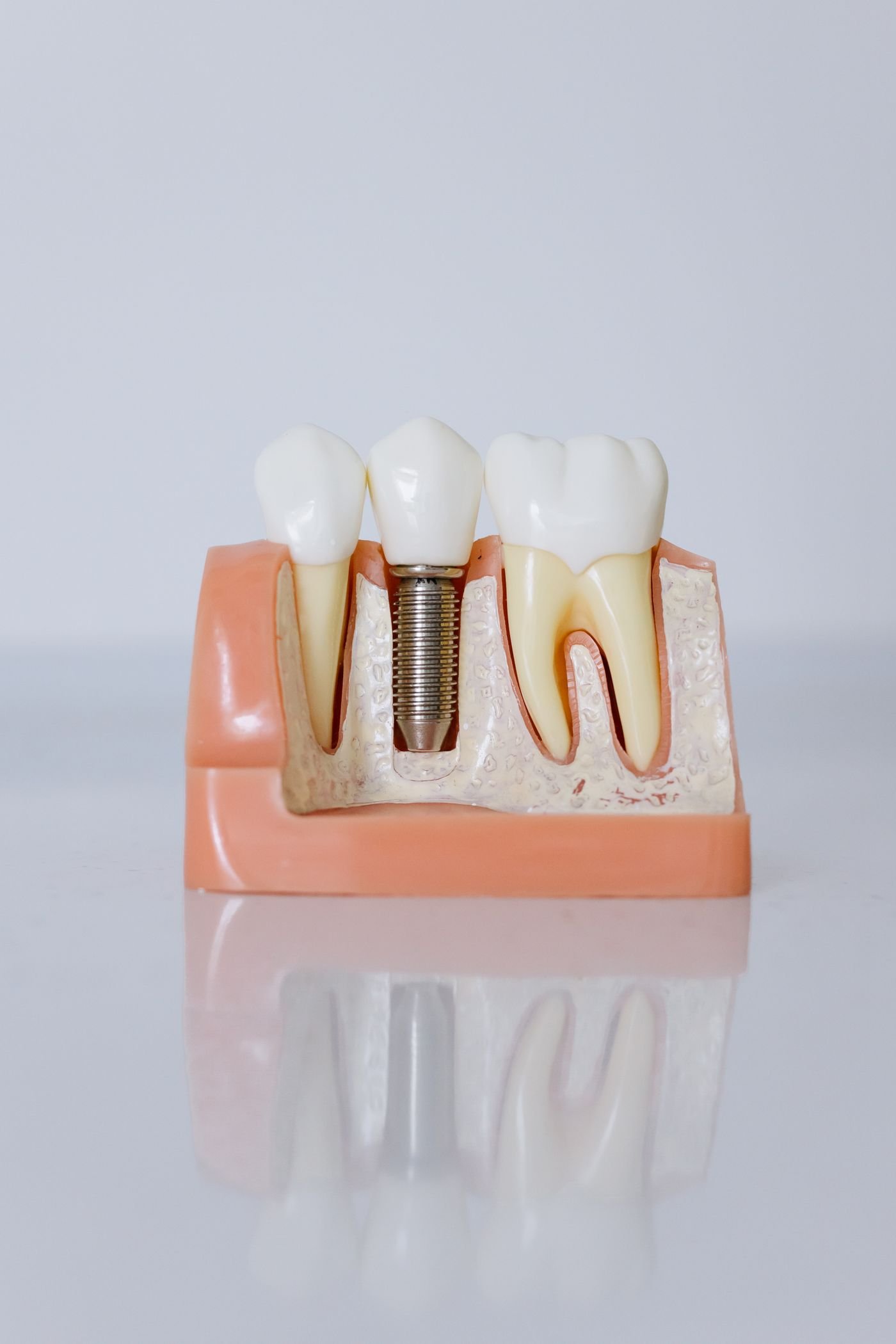

Needing a filling is common, not a sign of failure, and treating a cavity early is straightforward. A dental filling replaces tooth structure that has been destroyed by decay, sealing the tooth so bacteria cannot progress deeper toward the nerve. Small cavities are usually painless, which is exactly why they are found at check ups rather than by patients, and prompt dental fillings prevent the need for far more involved treatment later.
Decay does not stop on its own. Once bacteria have penetrated enamel and reached dentine, the process accelerates because dentine is softer and contains channels leading toward the pulp.
Catching that early is the whole purpose of routine examinations. Regular general dentistry visits identify lesions while a simple filling is still sufficient.
Left too long, a filling is no longer enough. Where too much structure has been lost, caps and crowns are needed to hold the remaining tooth together.
Deeper still, and the nerve becomes involved. At that point root canal therapy is required before the tooth can be restored at all.
For patients researching local options, the profile and reviews for this dentist in Aurora provide location details and patient feedback.
If it has been a while since your last examination, request an appointment so any early decay can be treated while it is still simple.
What Is a Dental Filling?
A filling is a restorative material placed into a cavity after decayed tissue has been removed. Its job is to restore shape and function, seal the tooth against bacteria, and protect the pulp from further insult.
The process is conservative by design. Only softened, infected tissue is removed, and as much healthy structure as possible is preserved.
Signs You May Need One
- Sensitivity to sweet foods in one specific tooth
- Brief sharp pain from cold in a single area
- A visible dark spot, hole or rough edge
- Food consistently catching in the same place
- Floss shredding at one particular contact point
- A previously filled tooth that has become sensitive again
- Nothing at all, since most early cavities are silent
Pain that lingers, throbs or wakes you at night suggests the pulp is involved and a filling alone will not be sufficient.
Filling Materials Compared
| Material | Appearance | Durability | Tooth removed | Best suited to |
|---|---|---|---|---|
| Composite resin | Tooth coloured | Good, typically 7 to 12 years | Minimal | Front and back teeth, visible areas |
| Amalgam | Silver metallic | Very good, often 12 to 20 years | More, needs mechanical retention | Large back tooth cavities |
| Glass ionomer | Tooth coloured, less polished | Lower, releases fluoride | Minimal | Root surfaces, children, temporary use |
| Ceramic inlay or onlay | Excellent | Excellent, 15 years or more | Moderate | Large cavities where a crown is not yet needed |
| Gold inlay | Metallic | Excellent | Moderate | Back molars with heavy load |
Composite Resin in Detail
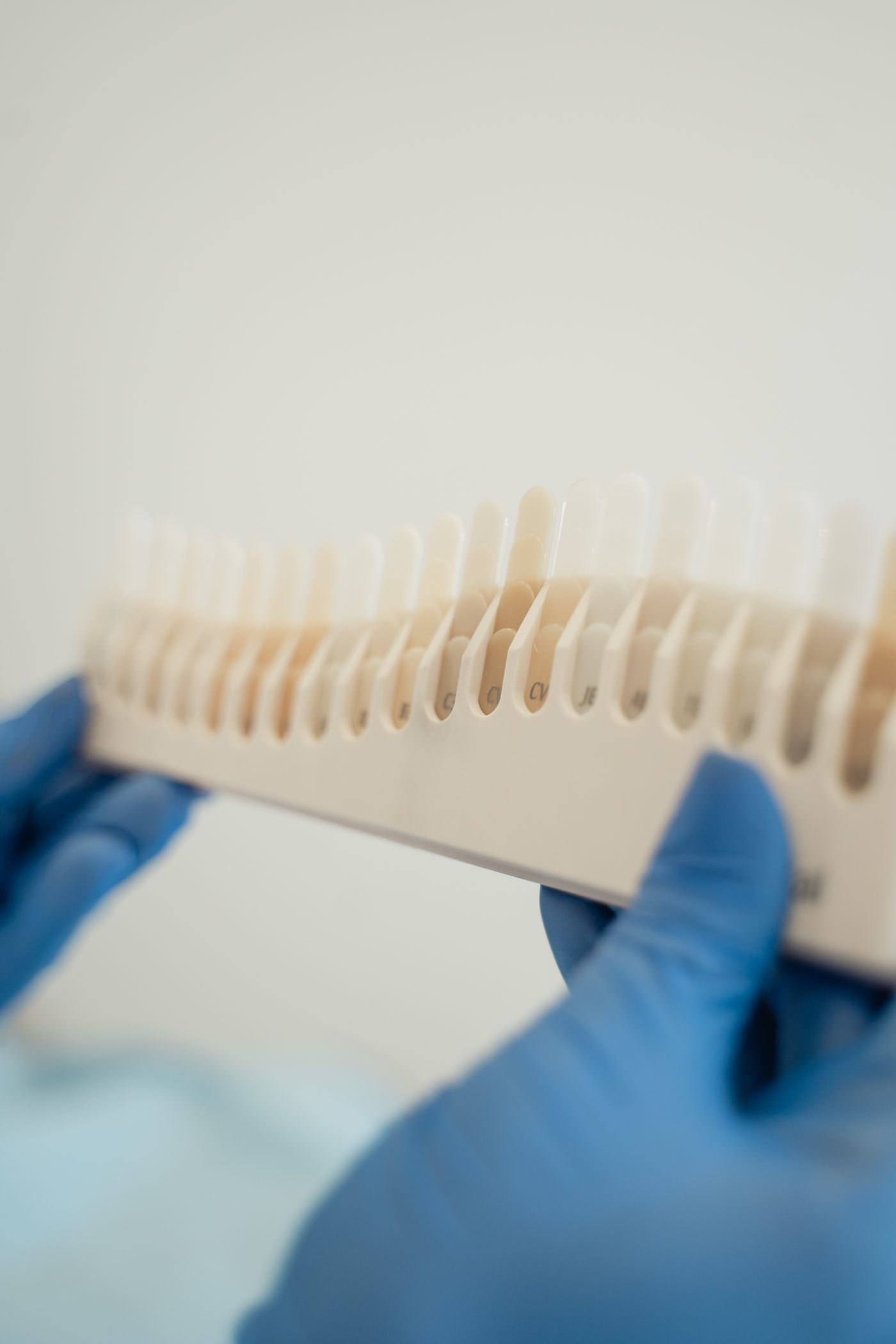
Composite is a resin matrix filled with glass or ceramic particles. It bonds chemically to tooth structure, which means less healthy tooth needs removing and the remaining walls are reinforced rather than simply filled.
- Matched to your tooth shade, so it is virtually invisible
- Bonded, which supports the tooth structurally
- Completed in one visit
- Repairable and can be added to
- More technique sensitive, requiring a dry field and careful layering
- Slightly more prone to staining at the margins over many years
Amalgam in Detail
Amalgam is an alloy of silver, tin, copper and mercury. It has been used for well over a century and remains one of the most durable and cost effective materials available.
The mercury question deserves a straight answer. Major health authorities have concluded that amalgam is safe for the general population, with the mercury bound within a stable alloy. Some countries have restricted its use in children and during pregnancy as a precautionary measure, and environmental considerations around disposal are a genuine factor in the shift toward alternatives. Many practices now use composite as the default for aesthetic and structural reasons rather than safety concerns.
The Filling Procedure Step by Step
- Diagnosis. Visual examination and radiographs confirm the depth and extent of decay.
- Anaesthesia. Local anaesthetic is placed where the cavity is deep or the tooth is sensitive. Very small surface lesions sometimes need none.
- Isolation. A rubber dam or matrix keeps the tooth dry, which is essential for a reliable bond.
- Decay removal. Softened, infected dentine is removed while healthy structure is preserved.
- Preparation. The cavity is cleaned, and a liner or base is placed if the cavity is close to the pulp.
- Placement. Composite is applied in layers, each cured with a light. Amalgam is condensed into the prepared cavity.
- Shaping and bite check. The filling is contoured to match natural anatomy and the bite is adjusted until it feels even.
- Polishing. A smooth surface resists plaque and staining.
Most single surface fillings take twenty to forty minutes. Larger multi surface restorations take longer.
After a Filling: What Is Normal
- Numbness for one to three hours depending on the anaesthetic used
- Mild cold sensitivity for a few days to a few weeks, particularly after a deep filling
- Slight tenderness to biting for a day or two
- An initially unfamiliar feeling as your tongue adjusts to the new contour
Report These
- A filling that feels high, so the tooth hits first when you bite
- Sharp pain on biting that does not settle within a week
- Sensitivity that is worsening rather than improving
- Lingering pain to heat, or pain that wakes you at night
- A rough edge that catches floss
Avoid chewing on the treated side until numbness has fully resolved, to prevent accidentally biting your cheek or tongue.
How Long Do Fillings Last?
Longevity depends far more on the patient and the tooth than on the material. Realistic expectations are seven to twelve years for composite, twelve to twenty for amalgam, and fifteen or more for ceramic inlays, with wide variation either side.
Factors That Extend Lifespan
- Good daily plaque control, particularly cleaning between teeth
- A nightguard if you grind or clench
- Limited acidic and sugary snacking through the day
- Regular check ups so early margin breakdown is caught
- A well balanced bite with no high spots
Factors That Shorten It
- Bruxism, which is the leading cause of filling fracture
- Large fillings in teeth with little remaining structure
- Dry mouth, which accelerates decay at the margins
- Frequent snacking and sipping of sweetened drinks
- Skipping check ups, so leaks are found only once they hurt
Fillings do not last forever, and that is not a treatment failure. They are a repair to a tooth that has already been damaged, and periodic replacement is expected.
Myths About Fillings and Cavities
Myth: if a tooth does not hurt, there is no cavity. Most early decay is completely painless. Pain typically arrives only once the lesion is deep.
Myth: cavities can heal if you eat the right things. Very early enamel demineralisation can partially remineralise with fluoride and saliva. Once a physical cavity has formed in dentine, it cannot self repair.
Myth: white fillings are always better. Composite is superior aesthetically and structurally in most situations, but very large cavities in heavily loaded molars sometimes do better with amalgam or a ceramic onlay.
Myth: getting a filling is painful. Modern local anaesthetic makes the procedure comfortable, and many small fillings need no anaesthetic at all. Sedation is available for patients with significant anxiety.
Myth: replacing old amalgam fillings improves health. Removing sound, symptom free amalgam is not recommended, because it means removing more healthy tooth. Replacement is appropriate when a filling is failing, leaking or fractured.
Patient Scenarios
A Silent Cavity Found at a Check Up
A patient with no symptoms has a small lesion between two molars visible on a radiograph. A conservative composite filling completed in one visit resolves it. Had they waited two years, root canal therapy would have been a realistic possibility.
A Repeatedly Chipping Filling
A wide amalgam restoration has fractured twice. Replacing it like for like would repeat the cycle. A ceramic onlay or crown that covers the weakened cusps solves the underlying structural problem.
Recession and Root Decay
An older patient on several medications has dry mouth and decay along exposed root surfaces. Glass ionomer, which releases fluoride and bonds well to root dentine, is used alongside high fluoride toothpaste and shorter recall intervals.
A Grinder With Multiple Fillings
A patient in their forties has flattened molars and morning jaw tightness. Fillings keep failing. A nightguard becomes central to the plan, because no restoration survives uncontrolled force indefinitely.
Preventing the Next Cavity
- Brush twice daily with fluoride toothpaste and do not rinse with water immediately afterwards
- Clean between every tooth daily, since decay between molars is the most commonly missed type
- Reduce snacking frequency rather than focusing only on total sugar
- Choose water as your default drink and keep juice to mealtimes
- Chew sugar free xylitol gum after meals to raise saliva flow
- Ask about sealants for deep grooves, which benefit adults as well as children
- Address dry mouth, since low saliva is one of the strongest cavity risk factors
- Attend examinations at the interval recommended for your individual risk
Restorative Care at a Trusted Aurora Dental Clinic
Dana Dental Aurora is one of the most trusted dental clinics in Aurora, holding a 5.0 Google rating from more than 485 patient reviews, and is located at 15277 Yonge St., Suite 1 and 2, Aurora, ON, Canada.
All treatment is carried out by clinicians registered with the Royal College of Dental Surgeons of Ontario, which sets provincial standards for training, radiography, materials handling and infection control. Radiographs are taken only when clinically justified and interpreted alongside a full clinical examination.
New patients are welcome, and a New Patient Special introductory package is available. The practice accepts CDCP patients under the Canadian Dental Care Plan, and CareCredit financing allows treatment to be divided into affordable monthly installments where a larger plan is required.
Care spans general dentistry, fillings, caps and crowns, dental implants, root canal therapy, emergency dentistry, wisdom teeth removal, pediatric dentistry, sedation dentistry, cosmetic dentistry, bonding, veneers, teeth whitening, bridges, mouthguards and nightguards. Flexible evening and weekend scheduling is available, and appointments can be arranged on +1 (647) 494-5006 or by email at info@danadentalaurora.ca.
Frequently Asked Questions
How do I know if I need a filling?
Often you will not, because early cavities are painless. Warning signs include sensitivity to sweetness in one tooth, brief sharp pain from cold in a specific area, floss shredding at the same contact point, or a visible dark spot. Radiographs at routine examinations detect decay between teeth long before symptoms appear.
Are white fillings as strong as silver ones?
For small to moderate cavities, yes, and composite has the advantage of bonding to the tooth so less healthy structure needs removing. For very large cavities in molars carrying heavy chewing forces, amalgam or a ceramic onlay may still offer better long term durability. The choice depends on the size, position and load.
How long should I wait to eat after a filling?
Composite fillings are fully set by the time you leave, so you can eat once the numbness has worn off, usually one to three hours. Amalgam takes longer to reach full strength, so avoid chewing hard foods on that side for about twenty four hours. Waiting for numbness to pass prevents accidental cheek or tongue bites.
Why is my tooth sensitive after a filling?
Deep fillings sit closer to the pulp, which becomes temporarily irritated during treatment. Mild cold sensitivity for a few days up to a few weeks is normal and should be steadily improving. Sensitivity that worsens, pain to heat, or pain that wakes you at night suggests the pulp may be irreversibly inflamed and needs review.
Should I replace my old amalgam fillings?
Not if they are sound, sealed and symptom free. Removing intact fillings means removing more healthy tooth structure for no clinical benefit. Replacement is appropriate when there is decay at the margin, a fracture, a leak, or when the tooth needs a crown or onlay for structural reasons.
Conclusion
A filling is a straightforward repair that stops decay before it reaches the nerve, and early treatment keeps the procedure simple. Composite and amalgam both have valid roles, and the right choice depends on the size, position and load on the tooth. Daily cleaning between teeth and regular examinations are what prevent the next cavity.